
You can step up your game with AI and cross-functional knowledge.
With tools like Copilot and ChatGPT, a new category of engineers can benefit massively from this technological evolution. The ones who embrace it will become the new generation of 10x Programmers and 100x Engineers.
This isn't hype. I've seen it happen in real time — developers who adopted AI tooling early are shipping at speeds that would have been inconceivable two years ago. The gap between those who leverage these tools and those who don't is growing every week.
10x vs 100x
The concept of a 10x developer has been around for decades. A 10x developer delivers work ten times faster and better than peers. They move quickly, code efficiently, and deploy reliably. They have deep technical expertise, strong problem-solving abilities, rapid learning skills, excellent communication, and attention to detail.
These are the people every startup wants to hire. They can do in a week what an average team does in a month. They debug issues faster, architect systems more elegantly, and ship code that requires fewer rewrites.
But a 100x engineer is something different entirely. A 100x engineer extends these capabilities across entire organizations. They don't just write great code — they transform how teams operate. They introduce new tools, workflows, and methodologies that multiply the output of everyone around them.
The distinction is crucial: a 10x engineer is a force multiplier for their own work. A 100x engineer is a force multiplier for the entire organization. They make everyone around them better.
Think about the engineer who introduces CI/CD to a team that was deploying manually. Or the one who sets up a component library that saves every designer and developer hours per week. Or the one who creates an internal tool that automates a repetitive process affecting the whole company. That's 100x thinking — it's not about how fast you can code, it's about how much leverage you can create.
AI Changes Everything
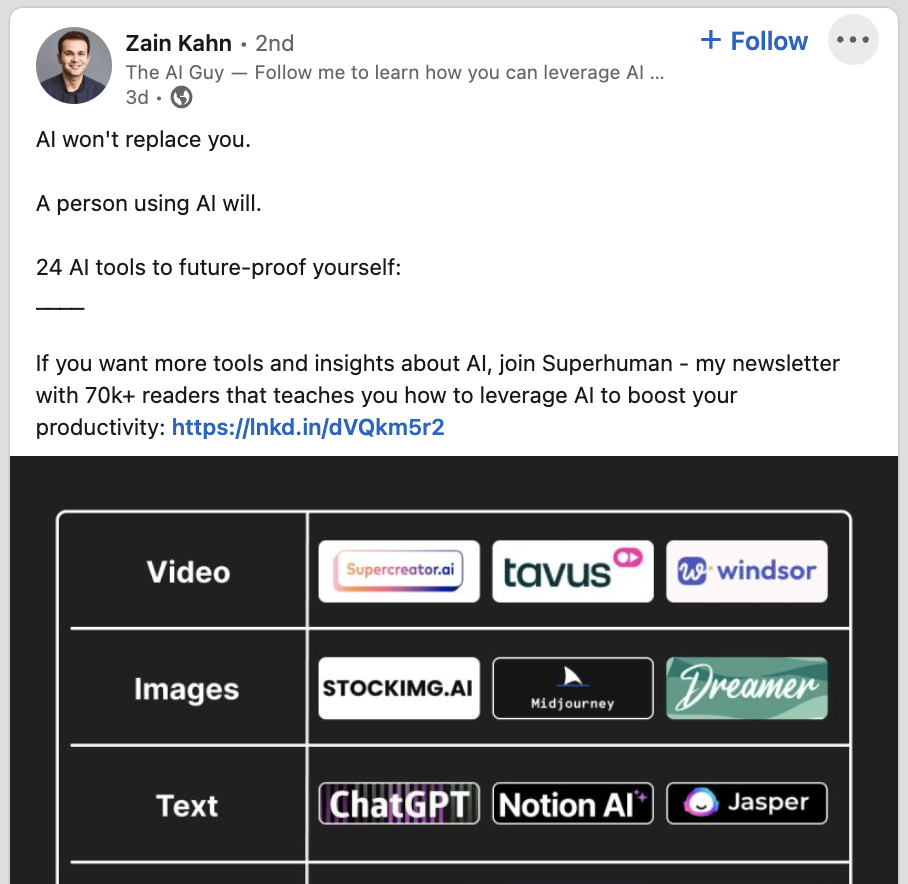
AI fundamentally changes the engineering landscape. Tools like ChatGPT enable brilliant professionals to achieve unprecedented productivity multipliers. Small teams of fewer than ten developers with business acumen can potentially compete against established enterprises.
Consider what's now possible for a single developer with AI assistance: you can prototype an application in hours, generate boilerplate code instantly, debug complex issues by describing symptoms in natural language, write documentation automatically, and even get architecture recommendations based on your specific constraints.
This doesn't replace engineering skill — it amplifies it. A mediocre developer with AI tools produces mediocre output faster. A great developer with AI tools produces exceptional output at a pace that was previously impossible. The skill gap doesn't shrink; it widens. AI is a leverage tool, and leverage amplifies whatever you already are.
Beyond purely technical skills, 100x engineers need cross-functional knowledge: marketing, business, sales, public speaking. They evaluate available tools pragmatically, eliminate waste, and leverage proven solutions. The engineer who understands why a feature matters to the business will build it better than one who's just following a spec.
This is where AI creates an interesting advantage. You can now use AI to quickly get up to speed on domains outside your expertise. Need to understand a marketing concept? Ask ChatGPT. Need to draft a business proposal? Let AI help with the structure while you provide the substance. The barriers between disciplines are lowering, and engineers who take advantage of this will operate at a level that pure specialists cannot match.
Business Transformation
Product development can accelerate dramatically. Rather than months or years for market-fit discovery, iterations can happen within weeks. Business specs feed directly into machines, with rapid adjustments following.
I've seen teams go from idea to deployed MVP in under a week using AI-assisted development. Not throwaway prototypes — actual products serving real users, collecting real feedback, and iterating based on real data. The traditional startup timeline of "6 months to MVP" is becoming "6 days to MVP" for teams that know what they're doing.
This compression of timelines changes the fundamental economics of building products. If testing an idea costs a week instead of six months, you can test 25 ideas in the time it used to take to test one. The rate of learning increases dramatically, and the teams that learn fastest win.
It also means that the concept of "failing fast" gets a real upgrade. When failure costs a week of effort instead of half a year and half a million dollars, the risk calculus changes entirely. You can afford to be more ambitious with your experiments because the cost of being wrong is so much lower.
The Corporate Reality
Major tech companies recognize these dynamics. Over 160,000 tech sector layoffs occurred in 2022, with numbers already exceeded in early 2023. Big corporations are increasingly focused on profitability and resource rationalization.
This isn't just cost-cutting — it's a fundamental reassessment of how many people you need to build great software. When AI tools can handle routine coding tasks, you need fewer junior developers doing boilerplate work. When deployment pipelines are automated, you need fewer ops people managing infrastructure. When testing can be partially automated with AI, you need fewer manual QA engineers.
The engineers who survive these shifts are the ones who provide leverage beyond what AI can do alone. Strategy, architecture, leadership, customer empathy, creative problem-solving — these are the skills that remain uniquely human and increasingly valuable.
Google exemplifies the waste that AI could help eliminate. The sheer number of products they've built and killed represents billions in misallocated resources. A more AI-augmented approach to product development — faster iteration, cheaper experimentation, better signal-to-noise in user feedback — could have saved many of those products or killed them faster.
AI can help close competitive gaps as large companies become slower and less ambitious. The bureaucracy that slows big companies down doesn't affect small teams that move fast and leverage AI effectively.
The Opportunity
Previously impossible achievements will become feasible, particularly for developers who embrace AI and automation. I've seen developers in the Lens ecosystem who demonstrate what 100x potential looks like in practice — handling marketing, fundraising, design, and complex application development within months. One person doing the work of an entire team, not by working 100-hour weeks, but by leveraging tools intelligently.
The question isn't whether this shift will happen — it's whether you'll be ready for it.
Here's how to get ready:
- Master AI tools now. Don't wait. Every month you delay, you fall further behind engineers who are already integrating AI into their daily workflow.
- Go cross-functional. Learn the basics of design, marketing, and business strategy. The 100x engineer understands the entire stack, not just the code.
- Think in leverage. Before writing code, ask: "How can I make this solve the problem for everyone, not just this instance?"
- Build in public. Share what you're learning, ship things people can see, collect feedback relentlessly. The 100x engineer is also a 100x learner.
- Stay hungry. The landscape is changing fast. Complacency is the biggest risk. Keep experimenting, keep learning, keep pushing.
The era of the 100x engineer is here. The only question is whether you'll be one of them.
Originally published on Substack.